Is your athlete's training actually working?
How parents can tell if baseball or softball training is really working: what should be measured, how progress should look, and the questions to ask any coach.
- A starting point on paper, measured before training begins.
- The same tests repeated on a schedule, so progress is something you can see.
- A plan aimed at your athlete's biggest limiter, not a generic drill list.
- An athlete who can explain what they're working on and why.
Every parent paying for training eventually asks the same question: is this actually working? You see the drive to practice, the bucket of balls and the bill. What's harder to see is whether your athlete is any better than they were three months ago.
Games won't give you a clean answer. One night your athlete faces a pitcher who throws hard and has command; the next, the weather changes everything. A few at-bats a week is a small sample, and a hard-hit line drive caught at shortstop goes in the book as an out. Results matter, but they're a noisy way to judge development.
So here's what to look for instead.
1. There's a starting point on paper
Real progress needs a "before." Before your athlete trains, someone should measure where they are: how well they move, how much force they produce, and what their swing looks like with numbers attached.
If nobody wrote down a starting point, there's no honest way to say later that things improved. "He looks better" is a feeling. A number that went up is a fact.
2. The same tests are repeated on a schedule
A baseline only matters if it gets tested again. Ask how often your athlete is retested and which tests are repeated. The answer should be specific, and the tests should match the first ones so you're comparing apples to apples.
When progress is measured over time, you can see it instead of guessing at it.
3. The plan targets your athlete's biggest limiter
Two hitters can both struggle at the plate for completely different reasons. One can't rotate well through the hips and upper back. Another has the movement but not the strength to use it. A third has both and needs swing work.
Good training starts with what's holding your athlete back. If every player in the group does the same drills in the same order no matter what their numbers say, the plan isn't built around your athlete.
4. Your athlete can explain what they're working on
Ask your athlete on the drive home: "What are you working on right now, and why?" A player in a good program can answer in a sentence or two. They know what the goal is, what it looks like when they get it right, and how it connects to the game.
If the answer is "I don't know, just hitting," that's worth a conversation with the coach.
5. Changes show up in practice before they show up in games
New movement and new strength take time to carry into games. Usually you'll see it first in practice: more consistent contact, the ball coming off the bat harder, a swing that holds up when your athlete is tired.
Give it time, and watch for those signs before expecting the box score to change.
Red flags to watch for
- No testing at the start, and no plan to retest.
- The same drills for every athlete, every session.
- Promises of fast, guaranteed results.
- A coach who can't explain in plain words what your athlete is working on.
Questions to ask any coach
- What did you measure first, and what did you find?
- What's the biggest thing holding my athlete back right now?
- How will we know it's getting better, and when will you retest?
- What should my athlete be doing at home between sessions?
You deserve clear answers to all four.
How we handle it at OTB
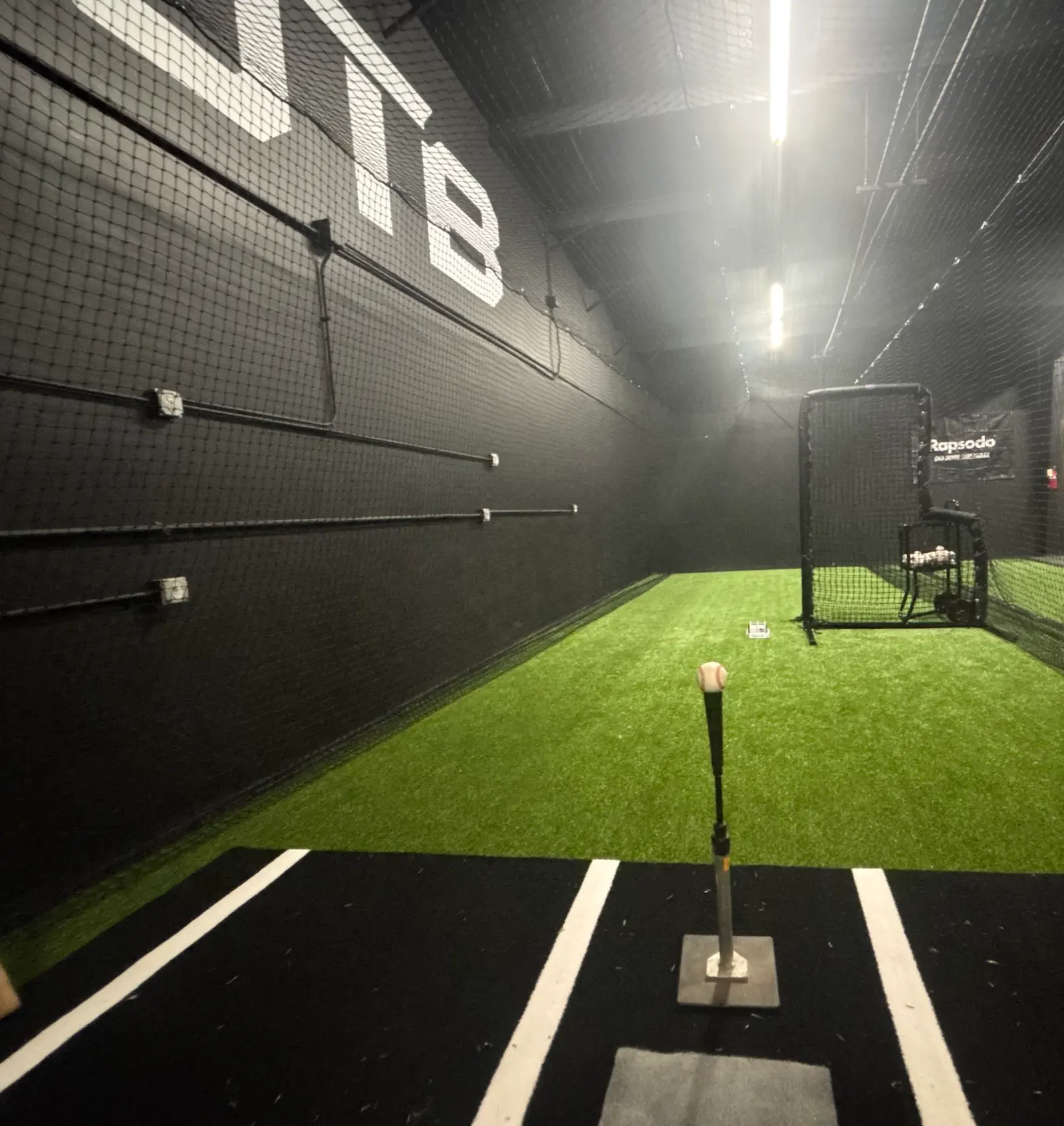
Every athlete at On The Barrel starts with a free one-hour assessment. We test mobility, starting with the thoracic spine and hips; strength, with a rotational med-ball throw, a vertical jump and a timed 10-yard sprint; and the swing, with a full hitting breakdown and exit velocity from Rapsodo. Parents stay the whole time.
You leave with a report: every result, what's holding your athlete back, and what to do next. From there, progress is measured over time, so it's something you can see, not just feel.